Geopolitical and military intelligence platform is now available in 10 countries

Sible team
Published 12 Oct 2026
Built to turn raw data into early warning
Sible Sentinel is an AI-powered geopolitical, military and geospatial intelligence platform built for organisations operating in complex, high-risk environments. It is designed for defence forces, law-enforcement agencies, governments, airlines, logistics providers and critical-infrastructure operators, and it turns real-time global data into operational intelligence and early warning.
On 26 December 2004, one of the largest earthquakes ever measured struck off Sumatra. Scientists knew within minutes. About two hours later the first waves reached Sri Lanka and India, and many people on those coasts had no warning. More than 200,000 people died.
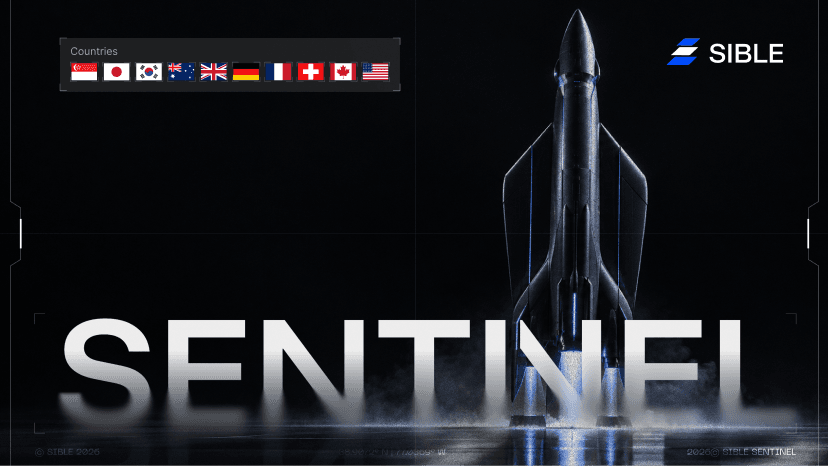
That gap, between a signal and a person who can use it, is the problem Sible Sentinel was built around. The platform launches soon, with access opening first in ten countries: Singapore, Japan, South Korea, Australia, the United Kingdom, Germany, France, Switzerland, Canada and the United States. The rollout will be gradual: these ten pioneer markets come first, and other countries follow in stages.
What Sible Sentinel brings
For airlines and logistics companies, it helps identify risks affecting airspace, ports, transportation routes, supply chains, and critical operations.
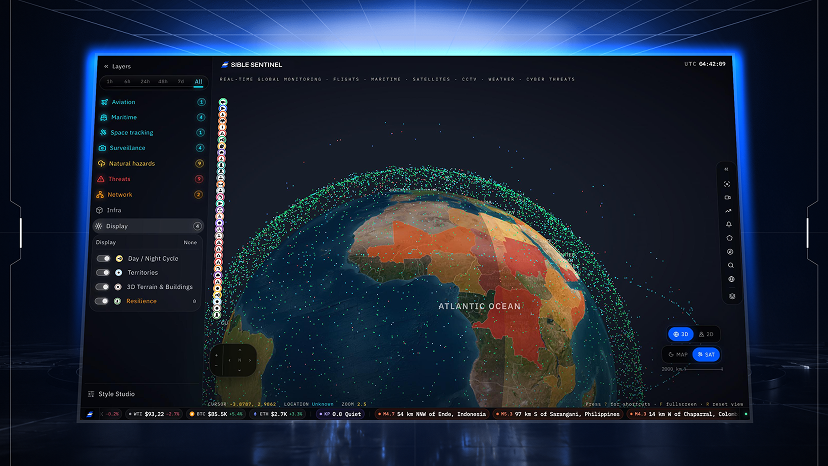
The platform continuously monitors military activity, conflicts, geopolitical developments, aviation, maritime movements, infrastructure, sanctions, security incidents and emerging risks. It connects these signals in one unified operational picture, helping organisations understand what is happening, assess its potential impact and respond faster.
Real-Time Monitoring and Early Warning
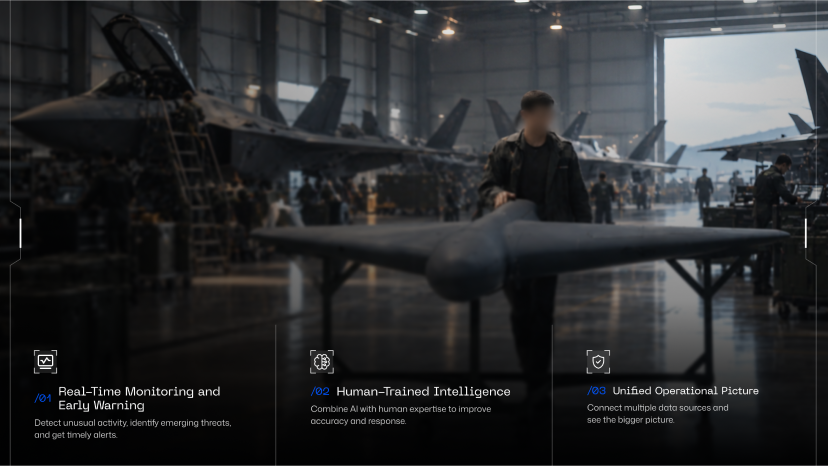
Sentinel uses AI to detect unusual activity, identify emerging threats, assess risk, and deliver timely alerts to the relevant teams. Organizations can monitor specific regions, routes, assets, facilities, and events based on their operational requirements.
For defense and law enforcement, Sentinel supports threat monitoring, situational awareness, and coordinated responses. For airlines and logistics companies, it helps identify risks affecting airspace, ports, transportation routes, supply chains, and critical operations.
Human-Trained Intelligence
High-quality human feedback helps improve Sentinel’s detection, classification, and warning capabilities.
Sentinel combines machine intelligence with human contributions. Approved users can support AI training by labeling data, classifying events, reviewing signals, and validating intelligence reports.
High-quality human feedback helps improve Sentinel’s detection, classification, and warning capabilities. Eligible contributors can receive rewards based on the accuracy and value of their validated work.
By connecting enterprise operations, artificial intelligence, and a distributed human-training network, Sible Sentinel turns global signals into intelligence that organizations can act on.
A week in the signals
The stories have little in common: different causes, different countries, different consequences. Yet each began as a signal.
Consider the first week of October. In Thailand, flash floods have killed 31 people and affected at least 3.5 million, according to the Center for Disaster Philanthropy's weekly update. Around 1 October, floods and landslides in Myanmar's Tanintharyi region killed 41 people, with at least 20 missing. In Spain, heavy rain in Catalonia left at least two dead and one missing, and emergency crews carried out at least 90 rescues.
In France, a protest that began on 21 September, when students in deprived areas of Paris boycotted classes over teacher shortages, has spread across the country, Al Jazeera reports. Tens of thousands of pupils and union members have taken part. Public-sector unions are also opposing a proposed 2027 budget that aims for 54bn euros in savings. By early Tuesday, 589 schools were disrupted and more than 6,100 people had been arrested, many of them under 18, according to the same report.
The stories have little in common: different causes, different countries, different consequences. Yet each began as a signal, whether rainfall and river data, reports from emergency services, or a run of local news items about school blockades. Most people met each one as a separate headline, days after the first sign.
Sentinel's bet is that such stories belong in one view, with their sources in plain view, so that a reader can follow a situation from its first signal and judge for themselves how serious it is. None of this requires a forecast. It requires someone to read the pieces together.
The ten launch countries
Sentinel will open first in ten countries across three regions.
Country | Region |
|---|---|
Singapore | Asia-Pacific |
Japan | Asia-Pacific |
South Korea | Asia-Pacific |
Australia | Asia-Pacific |
United Kingdom | Europe |
Germany | Europe |
France | Europe |
Switzerland | Europe |
Canada | North America |
United States | North America |
What happens next
Access begins with an early-tester phase. What they find will shape the version that opens to the public in the ten launch countries.
Two decades after the Indian Ocean tsunami, the question is no longer whether the data exists. It is whether the people who need it can read it in time. Sentinel is one attempt to answer that.
The Sible Team